
After the Story
The word was coined in 1977, when Serge Doubrovsky — responding to an empty category in Philippe Lejeune's taxonomy of autobiography — published Fils and called its mode autofiction: a text that was neither pure autobiography nor pure novel but held both in productive tension. The coinage came with a precise definition, printed on the book's back cover, the kind of manifesto French literary culture loves. Doubrovsky's formulation distinguished autofiction from the honest memoir by its embrace of literary, psychoanalytic language; the self was material to be worked, not simply reported.
That 1977 moment is the genealogical marker, but autofiction's real dominance came later, accelerating through the 1990s and reaching something like hegemony in the 2000s and 2010s. By the time Annie Ernaux won the Nobel in 2022, a practice once considered formally eccentric had become the mode that French fiction reached for almost by reflex. The question worth asking is why — and what has been lost.
The Temptation of the Real
The nouveau roman's experiments had cleared the field: plot as traditionally organised, character as psychologically rounded, story as coherent sequence — all became available for suspicion. What autofiction offered in the aftermath was a solution that looked like honesty. If fiction was always artificial, perhaps the most rigorous thing a novelist could do was stay close to verifiable experience, sign the text with their own name, and trouble the boundary between life and art rather than pretending the boundary wasn't there.
The coinage came with a precise definition, printed on the book's back cover, the kind of manifesto French literary culture loves
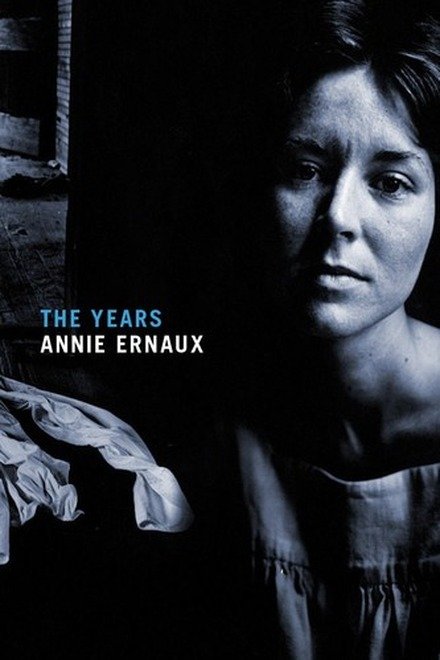
Ernaux developed her version of this with particular severity: a prose stripped of metaphor, anchored in sociological precision, in which the first-person narrator is explicitly the writer and the subject is also the world — class, women's bodies, collective memory. Her La Place (1983) and Les Années (2008) are less confessional than anthropological; the self is the instrument, not the spectacle. Édouard Louis carried the same impulse into rawer, angrier territory in En finir avec Eddy Bellegueule (2014), where autofiction became accusation — of a family, a class, a village's violence. Emmanuel Carrère, differently, made the oscillation between self-exposure and ethical discomfort into explicit subject matter, nowhere more uncomfortably than in D'autres vies que la mienne (2009) and Limonov (2011), where the narrator's presence raises questions the books don't always answer.
What these writers share is a conviction that the form's instability — you are never quite sure what contract you've signed as a reader — is a feature, not a bug. The uncertainty about where the author ends and the character begins is where the meaning lives.
The Limits of the Mirror
And yet. A mode that began as a formal provocation has, in its success, become something closer to a default. The proliferation of autofictional novels in France's autumn rentrée littéraire — where hundreds of titles compete each September — has produced a paradox: the gesture of radical honesty, repeated often enough, becomes a convention as constraining as any other. The self-as-subject can narrow as easily as it opens; solipsism and structural experiment are not the same thing.
The more searching critique is formal. Autofiction, at its weakest, mistakes the significance of experience for the significance of form. The fact that something happened to the author is not, by itself, an argument for its interest to a reader. Ernaux understood this and answered it with rigour. Many of her successors have answered it with sincerity, which is different. A novel still needs to do something with its material — shape it, resist it, find the pressure point where the personal opens onto something larger.
The autofiction turn was, and remains, genuinely productive: it returned French fiction to embodied experience after the nouveau roman's austerities, and it made the social dimensions of private life newly visible. But a mode is not a method, and the French novel's most interesting current practitioners are those who use autofiction's intimacy while staying alert to what a novel can do that a life, on its own, cannot.
A chronology
- 1977Doubrovsky publishes Fils; "autofiction" enters critical vocabulary
- 1983Ernaux's La Place published, establishing a sociological autofiction
- 2008Ernaux's Les Années; the mode's reach confirmed
- 2014Édouard Louis's debut; autofiction turns accusatory