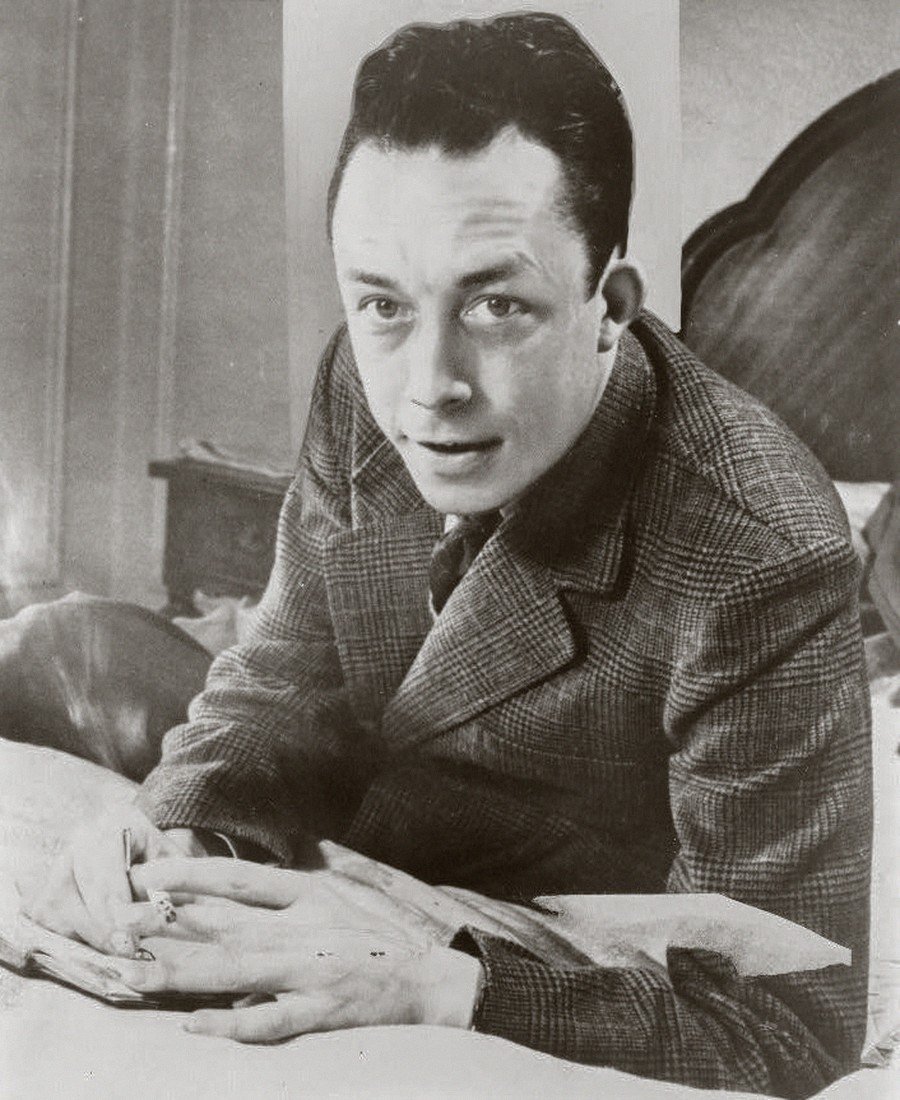
Albert Camus died in a car accident on a January morning in 1960, on a road near Sens. He was forty-six. The Nobel committee had given him its prize three years earlier. None of this has made him available for consensus. More than six decades on, Camus remains the most contested figure in French letters — not a monument but a battlefield, claimed and disowned by every faction in a country that has never stopped fighting over the questions he raised.
The quarrel with Sartre is where most readers begin, and with good reason. Their break, conducted publicly across the pages of Les Temps modernes in 1952, was a foundational event in French intellectual life — a split over Stalinist violence and the limits of political commitment that forced a choice between revolution and ethics. Sartre called Camus a moralist. Camus called Sartre's position a form of complicity. Both were right about enough to make the argument permanent. Contemporary French letters keep replaying it, often without noticing.
Algeria is the harder problem. Camus was born in Mondovi — now Dréan — in 1913, the son of a French pied-noir working-class family. L'Étranger was published in 1942; its central murder of an Arab — a man without a name — has accumulated interpretive weight across every generation since. Postcolonial reading has sharpened the accusation: that the novel aestheticizes the colonial erasure it appears merely to depict. Defenders reply that the text is precisely about an erasure its narrator cannot recognize, which is the indictment, not the excuse. Neither camp is wrong, which is why the argument never closes.
Albert Camus died in a car accident on a January morning in 1960, on a road near Sens
Then there is the politics. The French right has periodically attempted to annexe Camus — his republicanism, his wariness of abstraction, his refusal to endorse anti-colonial violence — while the left has responded by reclaiming his anti-fascist journalism, his trade-union solidarities, his late-life empathy with the dispossessed. When Sarkozy proposed transferring Camus's remains to the Panthéon in 2009, his son Jean declined the honour. The country was left arguing about that, too.
What makes Camus irreducible is that he resists the thing French intellectual culture values most: the total system. L'Homme révolté is not a position but a permanent interrogation. In a literary culture that rewards commitment, he committed only to the questions — which is why every side can find him useful, and why no side can keep him.
A chronology
- 1913Camus born in Mondovi, French Algeria
- 1942L'Étranger published
- 1951L'Homme révolté published
- 1952public break with Sartre
- 1957Nobel Prize in Literature
- 1960death near Sens
- 2009Sarkozy's Panthéon proposal; declined by Camus's son Jean