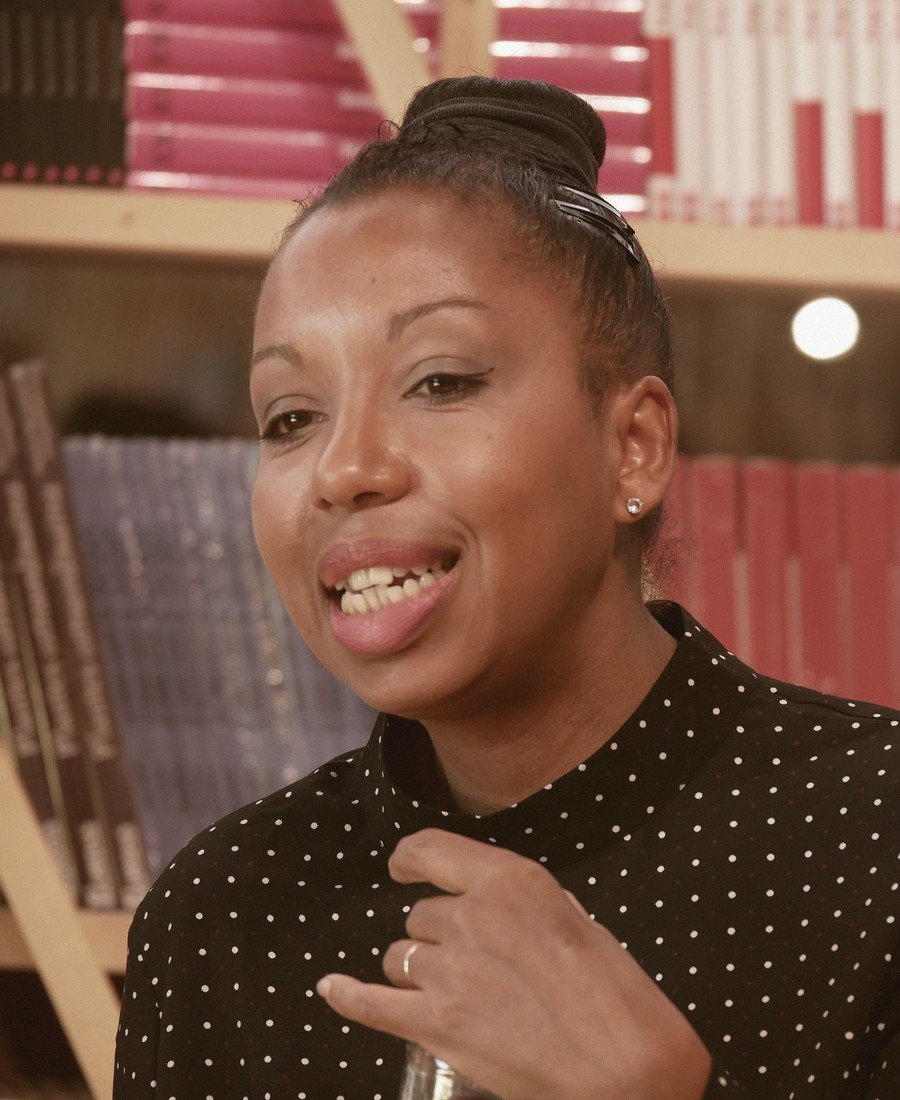
Marie NDiaye writes sentences that feel, at first, entirely reasonable. A woman visits her father. A family arrives in a new city. A mother tries to care for her children. The prose is clean, the syntax controlled, the diction precise — and then, almost without your noticing, the floor has given way. In NDiaye's fictional world, the familiar becomes hostile by increments so small that you cannot say exactly when the temperature dropped.
This quality — call it, after Freud, unheimlich, or simply uncanny — is not a stylistic tic. It is a structural argument. NDiaye, who was born in 1967 to a French mother and a Senegalese father and raised in France, produces novels in which the social contract of belonging is perpetually, quietly revoked. Not through overt confrontation but through refusal: doors that don't open, relatives who don't recognise, landscapes that seem to regard the protagonist with mild contempt.
Rosie Carpe and the landscape of abandonment
Rosie Carpe (2001), which won the Prix Femina that year, is perhaps the purest expression of this method. The novel follows Rosie, a young Frenchwoman from a provincial background, across a trajectory of serial abandonment — a brother who disappears, a mother who refuses, a lover who vanishes — until she arrives in Guadeloupe carrying an infant she cannot quite manage to mother. The Antilles of the novel is not the Antilles of postcard or of Glissant's Tout-Monde: it is a place rendered alien, sweaty and indifferent, a territory that refuses to deliver whatever salvation Rosie had unconsciously expected.
Marie NDiaye writes sentences that feel, at first, entirely reasonable
What NDiaye does in Rosie Carpe is refuse the novel of social explanation. We expect — given the conventions of French literary fiction — some account of how circumstances made Rosie who she is, some causal map of her diminishments. NDiaye withholds it. Rosie is simply in the world, barely in it, and the world presses on her with the weight of something that cannot be named. The effect is of reading naturalism with the skeleton of expressionism inside it.
Race operates in NDiaye's work the way religion operates in Flannery O'Connor's: as a charged field whose presence shapes everything and is almost never named directly. Rosie is white, her infant of mixed parentage; the novel does not editorialize. The discomfort is structural, embedded in who is seen, who is welcomed, who is allowed to pass.
Three Strong Women: the passport and the refusal
Trois femmes puissantes (2009) — Three Strong Women, translated by John Fletcher — won the Prix Goncourt and brought NDiaye her widest readership. The novel braids three stories of women confronting worlds that have decided, without appeal, to exclude them. Norah, a French lawyer of Senegalese descent, returns to Senegal to reckon with a father who has spent a lifetime evading her. Fanta and her husband Rudy sink into a spiral of shame and diminishment in France that culminates in a detention bureaucracy so quietly terrifying it reads like Kafka naturalised into contemporary French immigration law. Khady Demba makes a refugee journey so stripped of sentiment it recalls Beckett more than any tradition of social-realist testimony.
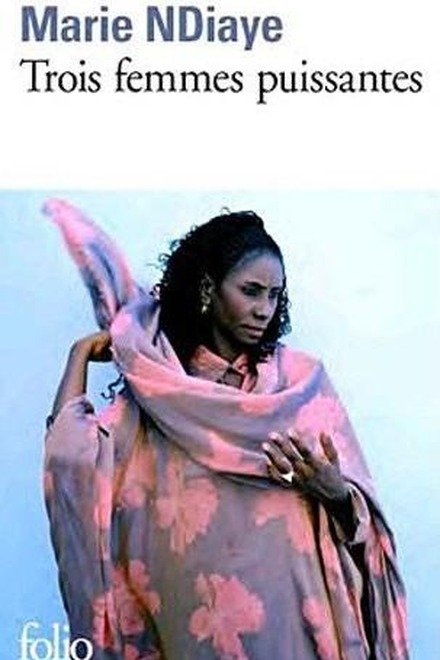
What unifies them is not victimhood — NDiaye bristles at any reading that would reduce her women to symbols of suffering — but a form of tenacious, unillusioned persistence. The strength of the title is not heroic. It is the strength of continuing to exist inside conditions designed, at every level, to make existence difficult.
The Prix Goncourt win generated a brief political controversy: NDiaye had made public remarks about France under Nicolas Sarkozy that a governing-party deputy, Éric Raoult, found unacceptable. The episode was itself very NDiayean — the state, in life as in fiction, signalling to a certain kind of body that its belonging is conditional.
The uncanny as critique
NDiaye is sometimes grouped with writers of the fantastique or with French authors of colour navigating questions of identity and postcoloniality. Both categorisations illuminate something and flatten something. She is genuinely interested in strangeness as a formal property of fiction — she has also written for the theatre, including Papa doit manger — but the strangeness is never decorative. It is the formal correlative of a very specific social experience: what it feels like to occupy a position in France that France has not quite authorised.
That experience is not, in NDiaye's hands, turned into testimony or protest. It becomes, instead, a poetics. The unsettling quality of her fiction — the sense that the floor will never be entirely solid — is what autofiction as the dominant contemporary French mode systematically avoids: not the first-person assertion of experience, but the third-person demonstration of what experience does to a person who cannot name it. NDiaye's France is recognisable in every surface detail and wrong in every depth. That wrongness is her subject.